Investment Guide·15 min read·Oct 2026
Water Damage vs. Flood Damage in Thailand: What Every Condo and Villa Owner Needs to Know
Johnnie Leung

Heavy seasonal downpours and flash flooding in Bangkok and across Thailand frequently bring a costly surprise to property owners: their insurance policy doesn’t cover the damage as expected. When water intrudes into your home, it seems natural to call it "water damage." However, in the world of Thai property insurance, "Water Damage" and "Flood Damage" are two completely distinct legal categories. Misunderstanding this distinction can leave homeowners with tens of thousands in out-of-pocket repair bills. Whether you own a high-rise condominium in Sukhumvit or a luxury landed villa in Phuket, understanding how your policy handles these two risks is essential for protecting your real estate investment.
What Is "Water Damage"? In standard Thai property policies, Water Damage covers water originating from internal systems or appliances inside the structure or building infrastructure. Typical Examples: A burst pipe inside a bathroom wall, an overflowing water tank, a leaking washing machine hose, or a clogged air-conditioning drainage line.
Coverage Status: Often included in basic or standard comprehensive home insurance policies.
What Is "Flood Damage"? Flood Damage refers to water entering the property from external bodies of water or surface run-off.Typical Examples: Riverbanks overflowing during monsoon rain, municipal drain back-ups onto street level, flash floods spilling into ground floors, or heavy rain accumulating on the ground and running into a building.
Coverage Status: Almost universally EXCLUDED from standard basic policies (including mandatory mortgage Fire Insurance) unless explicitly added as an optional rider or included under an "All-Risks / Natural Perils" extension.
Scenario A: Internal Water Damage in a Condo The Situation: A pipe bursts inside your unit's wall, or an upper-floor neighbour's bathroom leaks down into your ceiling, damaging your parquet flooring and built-in wardrobes.Insurance Handling:If the pipe is part of the building's main infrastructure, the Condo Juristic Insurance usually covers repairs to the structure and wall. If the leak originates inside a unit, the owner’s individual Water Damage coverage applies (or third-party personal liability if a neighbour caused it).
Scenario B: Flash Flooding in a Condo The Situation: Severe rain floods the street outside, spilling water into lower-level condo amenities, ground-floor units, or basement parking structures.Insurance Handling:Common Areas & Elevators: Covered under the Juristic Person's master policy—provided the condo board purchased a natural disaster/flood rider. Your Unit’s Contents: If your ground-floor unit floods, your personal condo policy will only pay out if you have an active Flood Damage add-on. Standard water damage clauses will reject the claim instantly. Your Car in Underground Parking: Vehicle flood damage is handled exclusively through your personal Type 1 Automobile Insurance, not the condo building's property policy (unless proven negligence by juristic management occurred).
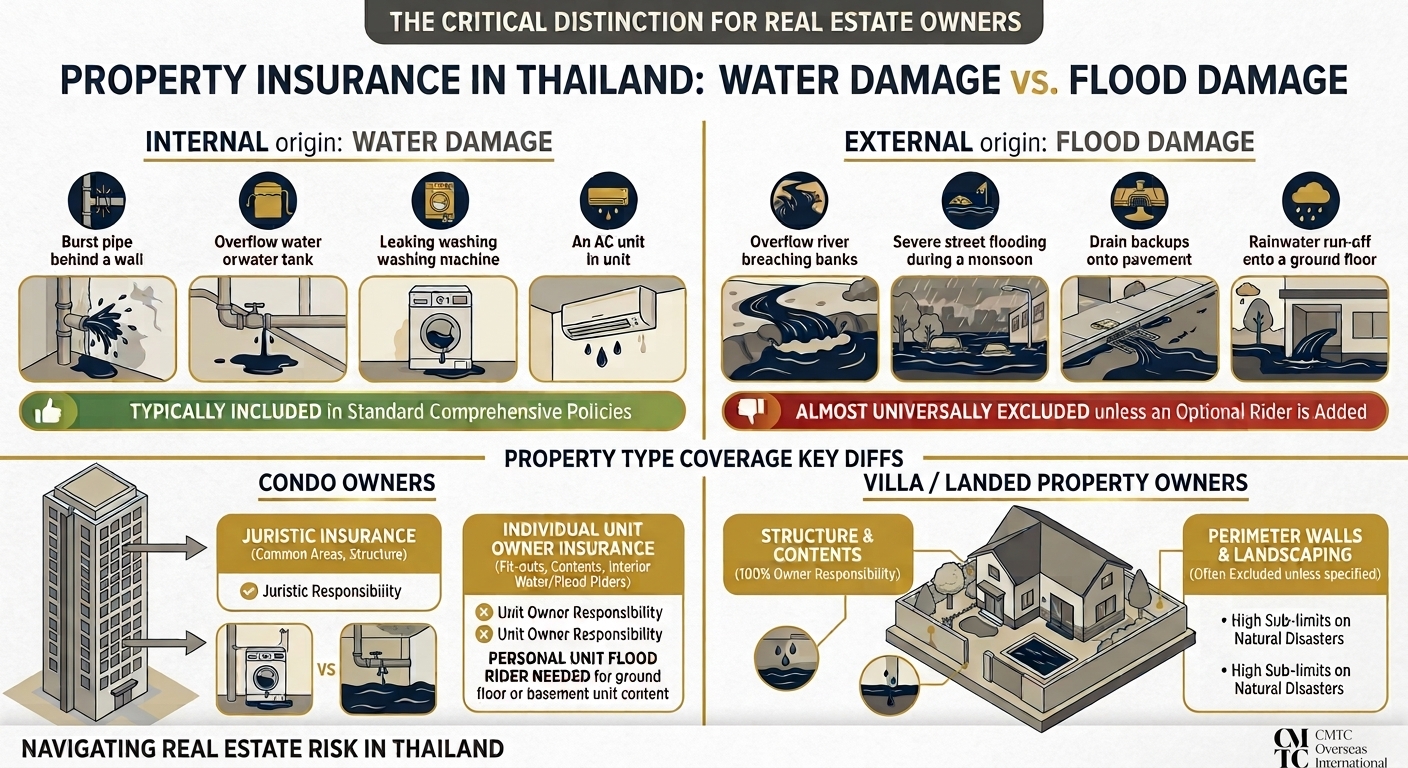
Key Takeaway for Condo Owners: Do not assume the Juristic policy covers your unit's interior or personal belongings. Obtain an individual unit policy with explicit Natural Perils / Flood coverage.
Major Pitfalls for Villa Owners in Thailand Perimeter Walls & Landscaping: Standard home insurance routinely excludes garden landscaping, swimming pools, and perimeter walls from flood damage unless specially endorsed. Sub-Limits on Natural Disasters: Standard packaged home insurance in Thailand may state it includes "Flood Coverage," but a quick look at the fine print often reveals a strict sub-limit—for instance, capping flood payouts at 20,000 THB to 100,000 THB, regardless of actual losses. Rebuild Value vs. Land Value: Property insurance in Thailand is based strictly on the cost to rebuild the physical structure, excluding the land value. Under-declaring construction costs to save on annual premiums triggers the "Average Clause," where insurers proportionally reduce your claim payout.
Navigating Thailand’s real estate and insurance landscape requires clear sight lines and expert local knowledge. Whether you are managing residential assets or expanding a commercial property portfolio, risk mitigation should be part of every purchase strategy.Looking to evaluate or expand your property portfolio in Thailand?
Reach out to CMTC to discuss how we can help you navigate real estate opportunities, asset management, and risk strategies across Thailand.